
Lake George, in Hobart Indiana, is a vibrant stopover and a winter haven for a diverse array of water birds, from the year-round mute swans (your ~5 residents) to the seasonal influx of 36 plus trumpeter swans in winter. Sandhill cranes forage in the nearby fields and lake shallows and there’s an ever-present Canadian geese and migratory ducks, egret herons, whooping cranes, and many more varieties. This mix highlights the area’s role as a key wetland in the Lake Michigan basin, supporting recovery stories like trumpeter swans (once nearly extinct, now rebounding in Indiana with over 100 breeding pairs statewide) and sandhill cranes (whose fall migrations draw thousands to nearby Jasper-Pulaski Fish & Wildlife Area).

Sand Hill Cranes in Deep River |
 Swans And Geese On Lake George Swans And Geese On Lake George |
 Large Flock of Large Flock ofMigratory Birds |
|
|
 Kildeer Bird Hovering Over Eggs Kildeer Bird Hovering Over Eggs |
 Egret Heron, On the Endangered Species List Egret Heron, On the Endangered Species Liston Lake George |
 American Bittern Heron – American Bittern Heron –Endangered Species List |
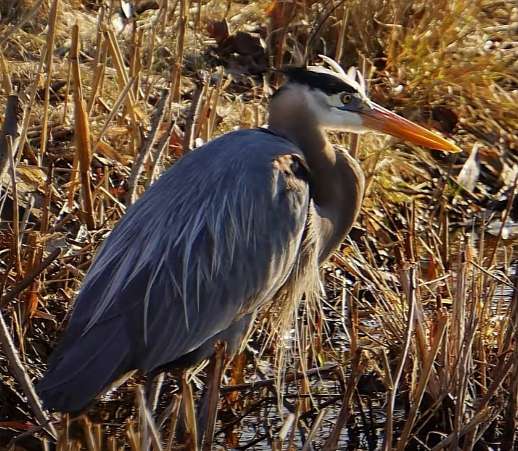 Great Grey Heron – Lake George Great Grey Heron – Lake George |
 Red Tailed Hawk Red Tailed Hawk |


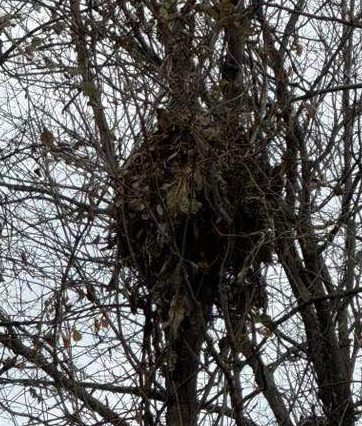
Show Above, Bald Eagle, Whooping Cranes and A large Bird’s nest (Not sure of the type)
High concentrations of EMFs (Electromagnetic Fields) negatively affect insects and birds by disrupting navigation, foraging, and reproduction, interfering with their natural magnetic senses, leading to disorientation, reduced colony strength, altered behaviors (like flight & memory), and increased mortality, with potential impacts on entire ecosystems due to these vital pollinators and migratory species being confused by artificial frequencies, including 5G. EhSciences

Unfortunately, the proposed 2.4 GW Amazon Hyperscale Data center (500-acre campus at 61st Avenue & Arizona Street, 1–2 miles southwest) could disrupt this ecosystem through construction (2026+) and operations, primarily via indirect stressors like noise, light, water changes, and habitat shifts. While not all species will be equally affected (e.g., adaptable geese may fare better than sensitive trumpeters), the overall risk is medium-high, especially during droughts when the shallow Lake George (6–8 ft average) is already stressed. Drawing from wildlife studies and data center precedents (e.g., Virginia/Ohio expansions near wetlands), here’s how each species of birds could be impacted.
Note: Mute swans, can exacerbate issues for migratory birds like trumpeters and cranes by competing for food/territory. But the data center could stress the whole community.
This Article will go into detail the effects of the bird population and the overall eco-system affecting the bird population. Photos by Brenda Toby and many other Hobart Residents.
Key Behaviors/Habits in Area – Potential Data Center Disturbance

Mute Swans (~5 year-round)
Mute Swans are aggressive grazers, and they uproot 8 lbs. vegetation per day; dominate ponds/lakes, displacing natives like trumpeters/cranes. Reduced aquatic plants from water drawdown (1.5–3M gal/day cooling, indirect via Deep River flows) could intensify food scarcity, forcing more aggression. Noise/Light from Construction (80–120 dB) may disrupt foraging; light spillover alters night behaviors, increasing stress. As invasives, they might thrive in disturbed areas but harm others more. Stress level is Medium because they are adaptable but could worsen native declines and year-round exposure.
Trumpeter Swans (~36 winter)
Trumpeter Swans are Winter migrants and need open water for takeoff (100+ yd runway); feed on shallow vegetation/ fish; and are sensitive to disturbance in pristine wetlands. Data Center Disturbance is High because the operational noise (50–70 dB from fans/generators) and light pollution could fragment winter roosts, delay migration or reducing energy reserves. Studies show ALAN (artificial light at night) disrupts swan diel patterns near rivers/lakes. Further disturbance can be from water where drought-amplified low levels expose more shoreline and limit access. In addition, runoff sediments cloud feeding areas. Trumpeter Swans prefer undisturbed sites, so they may abandon this location for quieter alternatives. Disturbance level is High: Winter peaks align with ops; sensitive to human activity, risking 20–50% productivity drop.

Sandhill Cranes (spotted in local fields and lakes)
Sandhill Cranes forage in harvested fields/ shallows for seeds/ invertebrates; they dance/ mate in open areas; roost in shallow wetlands; and migrate fall/ winter. Noise from Construction vibrations scare Sandhill Cranes from fields (nesting site); Data Center’s chronic hum masks call which alters pair bonds —and foraging shifts have been noted in noisy urban edges. Habitat: Field conversion to impervious surfaces (buildings/parking) erodes soil, reducing insects; pollution (NOx/PM from backups) bioaccumulates in prey. Disturbance level for sandhill cranes is high due to the direct field overlap and the noise – light are “sensory danger zones” that could displace migrants by 30–50%.
Canadian Geese (resident flocks)
Year-round grazers on lake edges/fields; nest in wetlands; highly tolerant of humans. Light/Noise: Minor—adapt well to urban lights/sounds, but chronic exposure elevates stress, reducing gosling survival. Lower water flows favor invasive species like mutes, increasing goose-mute conflicts over turf. Stress level here for Canadian geese is Low-Medium. Canadian Geese are resilient, but cumulative pollution could amplify overgrazing on stressed vegetation.
Migratory Ducks (various, seasonal)
Migratory Ducks use lakes for resting and refueling during migration; they dive for plants and invertebrates in shallows.
Light Pollution: ALAN (artificial light at night) attracts insects to lit water edges, boosting predators (e.g., herons) or altering drift—disrupts vertical migration in zooplankton (duck food base). Water Drawdown: Shallower depths expose nests; sediment from site runoff harms aquatic habitat. Noise fragments stopover sites. Disturbance level is Medium: Seasonal vulnerability; light/noise linked to 10–30% foraging efficiency loss in wetlands.
ACCORDING TO THE EBIRD.ORG Website: 85 Species were Observed at Hobart’s Fred Rose Lakeshore Park (Alone)
In October 2025, 8 Species were Observed in Fred Rose park: 20, Canadian Geese, 2 Mute Swans, 110 Wood Ducks, 115 Mallards, 3 Double Crested Cormorant, 5 Great Egrets, 2 Red -Headed Woodpeckers, and 2 Red Bellied Woodpeckers.
In July 4th 2025: An Anonymous Birder Observed: 1 caspian tern, 2 Great Blue Heron, 1 Osprey, 3 northern Flicker, 2 Great Crested Flycatcher, and 1 Baltimore Oriole.
ACCORDING TO EBIRD.ORG. WEBSITE,
129 Bird Species have been found at Lake George,
46 Species have been found at Lake George in 2025.
Species Found in 2025 Include:
American Coot, American Herring Gull, American Crown, American Robin, Bald Eagle, Barn Swallow, Belted Kingfisher, Black-capped Chickadee, Black-crowned Night Heron, Blue Jay, Brown-headed Cowbird, Caspian Tern, Cackling Goose, Canada Goose (950) Common Merganser, Common Goldeneye, Chimney Swift, Common Grackle, Common Nighthawk, Double-crested Coromorant, Domestic Canada Goose, Domestic Goose sp., European Starling, Graylag Goose, Gray Carbird, Great Blue Heron, Great Egret, House Finch, Hooded Merganser, House Sparrow, Mallard (100), Kildeer, Mourning Dove, Muste Swan, Northern Rough-winged Swallow, Northern Cardinal, Osprey, Red-winged Blackbird, Red-breasted Merganser, Red-tailed Hawk, Ring-billed Gull, Red-bellied Woodpecker, Ruby-throated Hummingbird, Song Sparrow, Turkey Vulture, Tree Swallow, White-breasted Nuthatch, Wood Duck, and Yellow-rumped Warbler,
Broader Ecosystem Effects of Data Centers:
Data Centers pose greater net risks by creating “sensory pollution” hotspots that degrade the quiet, dark wetland habitat these species rely on. For instance: Hydrological Strain: In D1 drought conditions. The facility’s indirect pull-on Deep River (via municipal supply/groundwater) could lower lake levels by 6–12 inches seasonally, shrinking open water for swan takeoffs and crane roosts while promoting invasives like mutes/geese. Pollution Synergies: Noise/ light from 24/7 operations travels 1–2 miles, interfering with breeding/ migration (e.g., crane dances, duck navigation); Air emissions degrade water quality, hitting the food web. Habitat Loss: When the site’s crane fields (crane hotspots) become concrete, it increases erosion and runs off that clouds Lake George and reverses the benefits that come from Wetlands.
Precedents from other existing Amazon sites (e.g., Oregon near wetlands) show bird displacement without strong mitigations, but Indiana’s protections (e.g., DNR wetland rules) could intervene. Mitigations and Next Steps Regulatory Hooks: MBTA/BGEPA cover migratory ducks, geese, and cranes. IDEM/USACE permits require avoiding wetland impacts. A survey for swans and cranes during site plan review should be executed. Even though Amazon pledges: “Water-positive” by 2030 includes recharge, there should be bird-specific buffers (e.g., shielded lights, noise walls). Even though their Virginia sites use wildlife corridors, the residents living there say they have no birds, and their pets don’t go outside.
 Photographed above is the Black Crowned Night Heron, An Endangered Species
Blue, White, Grey Herons and Egrets make Lake George Special
Adding Great Blue Herons and Egrets to the Picture. Great blue herons and egrets (likely great egrets and snowy egrets) are among the most sensitive wetland birds in the Lake George/ Deep River ecosystem. Their presence, combined with your resident mute swans, wintering trumpeter swans, sandhill cranes, bald eagles, geese, and ducks, turns this area into one of the richest year-round and migratory bird hotspots in northwest Indiana.
The proposed Amazon data center (~1–2 miles west) specifically threatens herons and egrets — and why they actually raise the stakes even higher than the eagles or swans alone: species.
The Data Center will hit Lake George, (Hobart, Indiana) with the Hardest and most likely quite Seve. The Great Blue Heron (year-round residents & breeders) Nest in tall trees or rookeries near the lake and they hunt fish and frogs in very shallow water (6–18 inches.) They are extremely shy and flush at the slightest disturbance.
The Data Center Chronic low-frequency noise (50–70 dB from cooling towers) travels well over water and causes abandonment of feeding sites and rookeries (studies show herons flush at distances up to 800–1,000 m from noise sources).
Light pollution at night completely disrupts their crepuscular/nocturnal fishing — herons feed heavily at dawn/dusk and on moonlit nights. Any drop in lake level (even 6–12 inches) from drought + data-center demand exposes their favorite shallow hunting flats on the southwest and east sides.
Data Center Disturbance to Herons is Very High — herons are proven “canaries in the coal mine” for wetland health. Colonies have disappeared from sites near new data centers in Virginia and South Carolina after construction. Great & Snowy Egrets (spring–fall breeders + some year-round) Colonial nesters in shrubs/ trees that stalk small fish and invertebrates in the same shallow margins and marshy edges have the same extreme sensitivity to noise and human activity as herons. Sedimentation from the 500-acre construction site running into Deep River → Lake George will cloud the clear in shallow water where they need to “see” their prey. Artificial night lighting draws insects away from natural areas and concentrates predators (raccoons, owls) around lit zones, making egret chicks more vulnerable. High Disturbance from data centers to Lakes And Wetlands has multiple studies show egret colonies abandon within 1–2 years of major industrial development nearby.
FURTHERMORE: Herons & Egrets make the case even stronger because they are indicator species for the entire wetland food web. When heron/egret colonies vanish, it signals the lake is no longer functioning as healthy, quiet, shallow-water habitat. Unlike geese (which adapt to almost anything) or even trumpeter swans (which can shift to larger bodies of water), herons and egrets have zero tolerance for chronic noise and light. Once they leave, they rarely return. Their rookeries are protected under the Migratory Bird Treaty Act, and any “take” (disturbance causing nest failure) requires federal permits and mitigation — something the bald eagle nest alone might not trigger if it’s slightly farther away.
Bottom Line for Lake George’s Signature Birds: If the data center is built as currently planned: Great blue herons and egrets are the most likely species to disappear first from Lake George within 2–5 years of operation. Trumpeter swans and sandhill cranes will be pushed harder during winter and migration. Bald eagles may adapt or shift hunting farther away. Geese will probably increase (they love disturbed, mowed landscapes).
In short: the Herons and Egrets you see every day are the ones that will tell you — faster and more dramatically than anything else — whether this Data Center project is truly compatible with keeping Lake George a living, wild lake. Documenting them now (photos, dates, locations of rookeries or regular feeding spots) and sending that to Indiana DNR Nongame Bird Biologist Allisyn Gillet (agillet@dnr.in.gov) or the USFWS Midwest Migratory Bird Office PermitsR3MB@fws.gov could force a much stricter review than the eagle nest alone has so far. Overall this is incredibly strong, multi-species case.
IN CONCLUSION
Lake George’s Bird Population will Disappear within 2-5 Years If all these Data Centers are Built. (25 Buildings Total)
Cover photo and several other phoso by Brenda Toby, (Facebook Page)
CLICK HERE TO SUBMIT AN ENDANGERED SPECIES COMPLAINT TO THE State of Indiana
EMF STUDIES OF DANGERS TO BIRDS AND WILDLIFE:
Preface: In the context of data centers, noise vibrations and EMF (Electromagnetic Field) vibrations are not the same, though they are often found together and can occasionally interact.
- Noise Vibrations are physical (mechanical) waves that travel through air or building structures. They are caused by moving parts like high-speed cooling fans, HVAC chillers, and backup diesel generators. These vibrations create the constant, low-frequency “hum” often reported by nearby communities.
- EMF Vibrations (often referred to as Electromagnetic Interference or EMI) are invisible energy waves produced by electrical current flowing through servers, power cables, and transformers. While EMF itself is not “sound,” it can cause physical vibrations in electronic components—a phenomenon called coil whine—where electromagnetic forces cause coils to physically vibrate and emit a high-pitched noise.
1. Teratogenic effects of radiofrequency electromagnetic radiation on the embryonic development of chick: A study on morphology and hatchability by Augustianath et al. Research in Veterinary Science (2023).
2. Short-term exposure of 2.4 GHz electromagnetic radiation on cellular ROS generation and apoptosis in SH-SY5Y cell line and impact on developing chick embryo brain tissue by Deena et al. Molecular Biology Reports (2025).
3. Possible Effects of Electromagnetic Fields from Phone Masts on a Population of White Stork (Ciconia ciconia) by Balmori. Electromagnetic Biology and Medicine (2009).
4. The urban decline of the house sparrow (Passer domesticus): a possible link with electromagnetic radiation by Balmori & Hallberg. Electromagnetic Biology and Medicine (2009).
5. A possible effect of electromagnetic radiation from mobile phone base stations on the number of breeding house sparrows (Passer domesticus) by Everaert & Bauwens. Electromagnetic Biology and Medicine (2009).
6. 4G mobile phone radiation alters some immunogenic and vascular gene expressions, and gross and microscopic and biochemical parameters in the chick embryo model by Islam et al. Veterinary Medicine and Science (2023).
7. Magnetoreception in birds: The effect of radio-frequency fields by Wiltschko et al. Journal of The Royal Society Interface (2015).
EMF VIBRATIONS SCIENTIFIC RESEARCH EFFECTS ON FISH:
1. Effects of 700 and 3500 MHz 5G radiofrequency exposure on developing zebrafish embryos by Torres-Ruiz et al. Science of the Total Environment (2024).
2. Short- and long-duration exposures to cell-phone radiofrequency waves produce dichotomous effects on phototactic response and circadian characteristics of locomotor activity rhythm in zebrafish, Danio rerio by Malik et al. Biological Rhythm Research (2021).
3. Neurobehavioural Changes and Brain Oxidative Stress Induced by Acute Exposure to GSM900 Mobile Phone Radiations in Zebrafish (Danio rerio) by Nirwaneet al. Toxicological Research (2016).
4. Transcriptomic and Long-Term Behavioral Deficits Associated with Developmental 3.5 GHz Radiofrequency Radiation Exposures in Zebrafish by Dasgupta et al. Environmental Science & Technology Letters (2022).
EMF VIBRATIONS SCIENTIFIC RESEARCH EFFECTS ON MAMMALS:
1. Tumor promotion by exposure to radiofrequency electromagnetic fields below exposure limits for humans by Lerchl et al. Biochemical and Biophysical Research Communications (2015).
2. Compound exposure of 2.8 GHz and 9.3 GHz microwave causes learning and memory impairment in rats by Sun et al. Heliyon (2025).
3. Fetal RFR Exposure From 800-1900 Mhz-Rated Cellular Telephones Affects Neurodevelopment and Behavior in Mice by Aldad et al. Scientific Reports (2012).
4. Disruption of the ovarian follicle reservoir of prepubertal rats following prenatal exposure to a continuous 900-MHz electromagnetic field by Türedi et al. International Journal of Radiation Biology (2016).
5. Evaluation of the genotoxicity of cell phone radiofrequency radiation in male and female rats and mice following subchronic exposure by Smith et al. Environmental and Molecular Mutagenesis (2020).
6. Toxicology and carcinogenesis studies in Hsd: Sprague Dawley SD rats exposed to whole-body RFR at a frequency (900 MHz) and modulations (GSM and CDMA) used by cell phones by the National Toxicology Program. U.S. Department of Health and Human Services, National Institutes of Health (2018).
7. Report of final results regarding brain and heart tumors in Sprague-Dawley rats exposed from prenatal life until natural death to mobile phone radiofrequency field representative of a 1.8 GHz GSM base station environmental emission by Falcioni et al. Environmental Research (2018).
8. Changes in the histopathology and in the proteins related to the MAPK pathway in the brains of rats exposed to pre and postnatal radiofrequency radiation over four generations by Tan et al. Journal of Chemical Neuroanatomy (2022).
EMF OR RADIOFREQUENCY FIELDS EFFECTS ON WILDLIFE:
1. Addressing Wildlife Exposure to Radiofrequency Electromagnetic Fields: Time for Action by Froidevaux et al. Environmental Science & Technology Letters (2023).
2. Low-level EMF effects on wildlife and plants: What research tells us about an ecosystem approach by Levitt et al. Frontiers in Public Health (2022).
3. Effects of non-ionizing electromagnetic fields on flora and fauna, Part 3. Exposure standards, public policy, laws, and future directions by Levitt et al. Reviews on
MORE PHOTOS TAKEN BY HOBART RESIDENTS . . . 


 Photos by Hobart Resident, Vernon Shaw
INDIANA DEPARTMENT OF NATURAL RESOURSES BIRD LINKS . . .
- If you have questions about birds, please check out the following Bird FAQs on the website: https://www.in.gov/dnr/fish-and-wildlife/nongame-and-endangered-wildlife/birds/bird-faqs/
- Other bird inquiries can be made to assistant, Amy Kearns, at 812-849-4586 or akearns@dnr.in.gov.
- If you have an injured or orphaned bird, please immediately contact your local wildlife rehabilitator, found here: https://www.in.gov/dnr/fish-and-wildlife/wildlife-resources/orphaned-and-injured-animals/wildlife-rehabilitators/
- If you have any diseased bird reports that need immediate attention, please refer them to the wildlife health reporting system, found here https://www.in.gov/dnr/fish-and-wildlife/wildlife-resources/wildlife-diseases-in-indiana/sick-or-dead-wildlife-reporting/.
- If you find a dead bald eagle, please contact your local conservation officer (CO), found here: http://www.in.gov/dnr/lawenfor/2755.htm. The local CO will retrieve the dead eagle for you.
- If you have concerns over trapped birds or birds causing property damage, please call your local wildlife biologist, found here: https://www.in.gov/dnr/fish-and-wildlife/wildlife-resources/wildlife-biologists/
- If you find a fully feathered young bird on the ground, please leave the bird where it is unless it is in danger (e.g. on a well-traveled road). Young fledglings that are learning to fly will remain on the ground. Their parents are able to find and care for them even if you do not see them in the area.
More Related Articles . . .

West Little Calumet River Wetland Restoration Project in Gary, Hammond and Hobart Indiana
The Wetlands Initiative (TWI) was awarded a $794,000 grant from the National Fish and Wildlife Foundation’s (NFWF) National Coastal Resilience Fund (NCRF) to complete this “Community-centered Final Design” phase. This project is being collaboratively facilitated by the Little Calumet River Conservation Collaborative. The West Branch of the Little Calumet River corridor covers…

Amazon Required Wetland Mitigation to Offset the HyperScale Damage in Hobart Indiana
When a data center pays for wetland restoration in a different location, it is typically called wetland mitigation or a voluntary water replenishment / stewardship project. Wetland Mitigation (or Off-site Mitigation) is usually required by environmental regulators (like the EPA or state environmental departments) when a data center paves over local…

EMF Concerns at Data Centers (And Mechanical Waves)
Data Centers pose greater net risks by creating “EMF Vibrations” that degrade the quiet and natural habitat wildlife relies on for food, reproduction, communication, navigation and survival. Furthermore, what most people are ignoring is the fact that there are High and Low Mechanical Waves and there are High and Low EMF Waves, each…

Alarming Health Implications from Virginia’s Data Center boom
Many Hobart Data Center proponents site the successes of Virginia’s Data Centers as an example of their “safe” uses. That was then, this is now. Many Alarming impacts have come out after Virginia’s Data Center boom started published by George Mason University, Fairfax, Virginia. A new groundbreaking study uncovers the alarming Health…

Documented Endangered Species at Hobart Indiana’s Data Center Location
Since the Indiana Natural Heritage Data Center Database does not guarantee the existence of Endangered Species in the Deep River Wetland area of Hobart Indiana, we have collected photographs from Hobart Residences that live there. We would like to thank these residents for their devotion to this project, but are also looking for…

How Hobart Indiana’s Amazon Data Centers Will Get Their 3GW Power And 400 MW of Storage
The following information regarding the source of power for the Hobart Data Centers has been found online, however, since we are a local Northwest Indiana company, we thought it was pertinent to publish this information intended solely for local educational purposes. A Northern Indiana Public Service Co. affiliate, known as NIPSCO Generation (GenCo),…

Sandhill Cranes Returning To Northwest Indiana
Habitat Restoration at Indiana Dunes National Park Sees Success as Sandhill Cranes Return Right now, thousands of sandhill cranes are gathered in the Great Marsh at Indiana Dunes National Park—and it’s an incredible reminder of what habitat restoration can achieve. For thousands of years, the Great Marsh was a place where…

New Report Published about the Effects of Data Centers On the Great Lakes
The Hobart Indiana Data Center is located closer to Lake Michigan than most folks realize. It’s actually 12 miles as the crow flies, and 16 miles using a 100% waterway, from Deep River (Hobart) to Lake Michigan. The effect of Data Centers on the Great Lakes is an important issue that should be…

Save The Dunes Transfers 5 Properties Over to Shirley Heinze
In Late December, 2025 Save the Dunes transferred ownership of five properties to Shirley Heinze Land Trust! With this transfer, Save the Dunes can focus its resources on supporting Indiana Dunes National Park and advancing its advocacy and community outreach work, while we utilize our expertise and experience to continue the stewardship and…

Hobart In Lake County Indiana is Known for it’s Biodiversity and Wetland Ecosystems
Northwest Indiana—especially Lake County along the southern shore of watershed basin of Lake Michigan — contains one of the most ecologically diverse regions in the whole county. This diversity comes from the area’s unique glacial history, the mixing of dune, wetland, and prairie ecosystems, and the influence of Lake Michigan’s moderating climate. …

Proven Documentation that Data Centers Damage Wetlands
The Deep River wetlands around Hobart Indiana’s Deep River flows through Lake County Indiana towards Lake Michigan. Deep River wetlands refer not just to a single swamp or marsh, but to a network of wetlands, riparian corridors, floodplains, forested bottomlands, marshes, woodlands, savannas, lakes, rivers, ravines, bottomland forests and prairie habitats that are scattered…

Birding in the Miller Beach Area
Late Fall and Early Winter are the Best times to find migrating Birds in Indiana’s diverse habitats that are home to over 400 documented bird species, making it the perfect place for a birding adventure. The birding experiences won’t disappoint, from the one-of-a-kind migration of Sandhill Cranes to Bald Eagles perched atop tree-tops.…

Endangered Species Found In Cedar Lake Indiana
On July 2nd, 2020 Humane Indiana Wildlife received a call about two young chicks found in a window well in Cedar Lake, IN. Upon further communication with the two teens who found the chicks, it was determined the chicks were actually Virginia Rails, an endangered species in the state of Indiana. “When the finders…

White Pelican & Great Egret Spotted at Wolf Lake
by Carolyn A. Marsh Rick Catania took the beautiful photograph of an American White Pelican with a Great Egret on October 11, 2018 seen here at Forsythe Park/Wolf Lake. Another pelican joined it, but I saw only one on October 25. There was a lot of drama at Forsythe Park in October. Many…

by Carolyn A. Marsh, Site Steward The Hammond Lakefront Park & Bird Sanctuary, a 600-meter wooded strip of Lakefront fill, lies within a kilometer of the Illinois line on Lake Michigan. A virtual oasis of vegetation within a vast urban sprawl, this site, once well-known simply as “The Migrant Trap,” is flanked to…

NwIndiana Features 7 Best Birding Sites
Indiana’s diverse habitats are home to over 400 documented bird species, making it the perfect place for a birding adventure. The birding experiences won’t disappoint, from the one-of-a-kind migration of Sandhill Cranes to Bald Eagles perched atop tree-tops. Luckily, the Indiana Audubon Society recently created the Indiana Birding Trail, featuring 64 great bird watching locations. The trail guide covers everything you need to know on each area, including eco-regions, climate influences, bird species, and more.
CONTINUE READING . . .

Read the Rest of Our Birding Articles, CLICK HERE!
Read More Of Our Birding Blogs:
Birding in Northwest Indiana /31/20 BLOG
White Pelican and Great Egret Spotted
Festival of the Owls
Songbird Prairie Bed & Breakfast awarded “Best Romantic Getaway”
Northwest Indiana Birding Festival
Have Your Heard of Albino Birds?
Birding at Gibson Woods
Snowy Owl Saved at Whiting Parks
Bald Eagle Returns to the Calumet Region
White Breasted Nuthatch Spotted
Snowy Owl Spotted
Uncommon Brant Goose Visits Hammond

Shirley Heinze Acquires 4,000 Acres in Stake County
4,000 Acres of the “Big Eastern property” in rural Stake County has been acquired by Shirley Heinze Land Trust, to protect and preserve the land. “For over sixty years, the Lucas family has treasured and provided stewardship for this fascinating and biodiverse sand country landscape,” said Marty Lucas, President of Big…
 (2025) UNIVERSITY OF MICHIGAN: Gerald Ford School of Public Policy:
What Happens When Data Centers Come To Town :
Current technologies force a tradeoff between energy and water efficiency, limiting sustainable solutions. Data Centers Do Not Bring in High Paying Jobs; Data Center Tax Breaks Only Benefit Corporations; Reduces Tax Revenue for School Districts; Higher Energy Rates for Consumers; Higher Resource Consumption; And Much More.
CONTINUE READING

Susie Young Baxter, CEO, has published PanoramaNOW Magazine for 31 years. Her hobbies are Camping, Boating, Hiking, Nature, Gardening and Outdoor Activities. She is an Artist, Graphic Designer, an Avid Seamstress, Dabbles in Homemade Crafts and Landscaping. Since her Father was a Health Teacher, she also likes homeopathic Health Solutions. Since blogging started over 10 years ago, PanoramaNow has been added to Newsbreak – a national news affiliate.


