
The Hobart Indiana Data Center is located closer to Lake Michigan than most folks realize. It’s actually 12 miles as the crow flies, and 16 miles using a 100% waterway, from Deep River (Hobart) to Lake Michigan. The effect of Data Centers on the Great Lakes is an important issue that should be looked into. The Great Lakes Region is undergoing one of the most dramatic structural shifts in electricity demand it’s seen in decades, driven almost entirely by the rapid expansion of Data Centers.

In January 2026, the Center of Economic & Policy Studies at the University of Virginia published a lengthy, fact-based report titled Economic, Fiscal, and Energy-related Impacts of Data Centers in the Great Lakes Region. This report is 135 pages long, but here are some excerpts that should peak some interest in the impact of Data Centers on the Great Lakes. Since Hobart Indiana Data Center is within the Great Lakes Region, we felt is pertinent to reveal some of the key points exposed in the report.
“The Great Lakes region now hosts nearly one-fifth of all U.S. data center facilities, with growth expected to exceed national averages through the end of the decade. Using detailed S&P Global facility data, this report provides the first unified regional assessment of location patterns, energy requirements, and economic impacts across the eight Great Lakes states.”
“In states such as Illinois, Ohio, Minnesota, and Indiana, there will be steep increases, and in some states data centers are projected to account for 20–40% of statewide electricity consumption by 2040 in the average scenario,” the report continues.
“The combination of affordable land, improving grid infrastructure, favorable climates, and proximity to major urban markets has positioned the Great Lakes area as a national hub for data center development. As these facilities grow in number, size, and energy intensity, state and local governments face complex questions related to infrastructure adequacy, environmental sustainability, fiscal exposure, and long-term competitiveness. Understanding the geographic distribution, energy dynamics, and economic implications of this sector has therefore become essential for shaping effective regional strategies and supporting evidence-based policymaking. This issue is especially consequential for the Great Lakes region as its environmental and economic identity is tied to one of the world’s largest freshwater systems. Because data centers can exert direct pressures on water resources through cooling demands and indirect pressures through their reliance on water-intensive electricity generation, understanding their growth trajectory is vital for safeguarding long-term water sustainability and regional resilience.”
“Despite meaningful improvements in energy efficiency, particularly the decline in average PUE values for newly built facilities, absolute electricity demand continues to rise sharply because data centers are becoming larger, denser, and more technologically complex. Gains in efficiency are consistently outpaced by increases in computational requirements and the escalation of AI-related workloads.
The installed electrical capacity of data centers in the region has expanded exponentially, doubling every four to seven years, with projected installed requirements reaching 8.9 GW by 2030. This reflects not only the growth in the number of facilities but also the transition toward power-intensive hyperscale and wholesale typologies. These facilities increasingly resemble large industrial consumers—on par with steel mills or chemical plants—rather than traditional commercial customers.”
“Since 2005, installed capacity in the Great Lakes Region has doubled roughly every five years and is projected to reach 8.9 GW by 2030. Growth in construction far outpaces grid upgrades: facilities can be built within 2 years, while substations, transmission lines, and generation assets typically take much longer. Based on regional projections, data center electricity demand is estimated at more than 70 TWh in 2030, rising dramatically thereafter. Under the average scenario, total demand reaches 230 TWh by 2040, representing 21% of all electricity consumed in the Great Lakes region. By 2050, this could rise to 35%, depending on the trajectory of AI-related workloads and siting decisions.”
This report also states that local governments need to “evaluate local sitting authority and local impact disclosures. Local governments need to be able to request detailed information about water use, cooling methods, noise levels, diesel generator emissions, storm water runoff, and traffic impacts before considering data center permits. This empowers communities to make informed land-use decisions and prevents costly infrastructure conflicts after construction begins.” (page 110)
Environmental impacts beyond electricity consumption — especially those related to air emissions from backup generation and water use associated with cooling systems — require more detailed evaluation; facility-level data; and regulatory coordination. Emissions from diesel generators or water withdrawals need more evaluation, as well as evaluation of cumulative impacts on local air sheds or aquifers needs further investigation (beyond what’s in this report.)
Even though Virginia isn’t even close to the Great Lakes, that University of Virginia was able to take local Data Center Information and apply it to the Great Lakes Region.
Here’s the University of Virginia Link
CLICK HERE TO SUBMIT AN ENDANGERED SPECIES COMPLAINT TO THE State of Indiana
HERE’S MORE RESEARCH LINKS:

NEW 2/25/16 The Hill:
Data Centers associated with Lung Disease
The report was compiled by Community & Environmental Defense Services (CEDS) founder and president Richard Klein, who has been working in development-related concerns for 40 years. Klein found that a single Data Center could pose negative health risks for people living at least 0.6 miles away, sometimes further.
Klein said air pollution risks come from data centers emitting nitrogen dioxide and tiny, inhalable particles that can harm people’s lungs. According to the National Institute of Health, the particles cause between 100,000 and 200,000 premature deaths each year.
CLICK HERE FOR MORE:
https://thehill.com/policy/healthcare/5755114-data-centers-air-pollution-lung-issues-report/

5/27/25 National Library of Medicine
Data Centers Generate Significant
Noise, Air, Water, and Light Pollution
Data centers generate significant noise pollution, air pollution, water pollution, and light pollution primarily from diesel generators and Heating, Ventilation, and Air Conditioning (HVAC) systems. A recent model indicates that the U.S. data centers in 2030 could contribute to nearly 1300 deaths annually, resulting in a public health burden of more than $20 billion. To protect communities, policymakers and industry must proactively mitigate these health risks. Key strategies include: (i) Power data centers with renewable sources and replace diesel generators with battery storage or fuel cells to eliminate exhaust emissions. (ii) Use advanced cooling technologies to reduce water use and recycle waste heat, alleviating local water scarcity and enhancing energy efficiency. (iii) Mandate public reporting of data center pollution.
CLICK HERE FOR MORE: https://pmc.ncbi.nlm.nih.gov/articles/PMC12273412/

VIRGINIA’S DATA CENTERS GROUNDBREAKING
STUDY REVEALS THE SHOCKING TRUTH
Uncover the alarming Health Implications of Virginia’s Data Center boom! A groundbreaking study reveals the shocking truth:
This paper, to the best of our knowledge, is the first-of-its-kind assessment of the potential health implications associated with data centers.
When they assessed the health risks associated with data centersthey found air pollution, extensive water use, noise pollution, and detrimental land use’s risk of disrupting natural ecosystems and community well-being.
AIR POLLUTION:
Diesel generator’s harmful pollutants like Sulfur Dioxide, Nitrogen Oxide (NO2), Carbon Dioxide (CO2) particulate matter (PM), and Carbon Monoxide are linked to serious health harms including respiratory and cardiovascular diseases, various cancers, neurological disorders, and conditions such as stroke, dementia, diabetes, and childhood asthma
WATER POLLUTION:
Virginia’s Data Centers have weakend the water supply, and further worsens health risks, where drought conditions leads to stagnant, warm environments that promote the growth of pathogens, increasing the risk of waterborne diseases such as diarrheal illnesses, eye and ear infections, and E. coli, among others.
NOISE POLLUTION:
The health impacts of noise pollution include long-term risks such as heart disease, permanent hearing loss, and tinnitus; chronic effects such as hypertension and endocrine disruption; and acute effects like decreased sleep quality and temporary hearing changes.
Noise pollution has also been linked with an increase in mental health concerns, such as stress-related disorders and increased annoyance, particularly in sensitive individuals. Past research has shown that noise pollution is particularly concerning for children, as exposure can lead to poor cognition
Studies have found that children in noisy environments, defined by the U. S. EPA as chronic exposure above 55 dBA (day–night average), exhibit poor school performance, increased stress, and behavioral issues, with noise pollution also being linked to decreased learning, lower reading comprehension, and concentration deficits.
CONTINUE READING . . .
https://frontiersin.org/journals/climate/articles/10.3389/fclim.2026.1648912/full
MORE RELATED ARTICLES . . .

West Little Calumet River Wetland Restoration Project in Gary, Hammond and Hobart Indiana
The Wetlands Initiative (TWI) was awarded a $794,000 grant from the National Fish and Wildlife Foundation’s (NFWF) National Coastal Resilience Fund (NCRF) to complete this “Community-centered Final Design” phase. This project is being collaboratively facilitated by the Little Calumet River Conservation Collaborative. The West Branch of the Little Calumet River corridor covers…
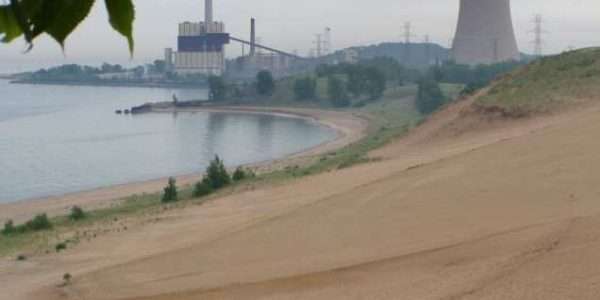
Indiana Dunes National Park’s Mount Baldy Sand Project Completed
Mount Baldy’s parking area and beach access route re-opened to the public on Monday, June 15th, 2026 and a sand management project was completed. Visitors should be aware that the reopening applies only to the Mount Baldy access site, parking area and beach access route. The Mount Baldy summit and dune face remain closed due…

EMF Concerns at Data Centers (And Mechanical Waves)
Data Centers pose greater net risks by creating “EMF Vibrations” that degrade the quiet and natural habitat wildlife relies on for food, reproduction, communication, navigation and survival. Furthermore, what most people are ignoring is the fact that there are High and Low Mechanical Waves and there are High and Low EMF Waves, each…

Indiana Dunes Succession Trail To Be Replaced
Indiana Dunes National Park is planning to replace the aging boardwalk along the West Beach Dune Succession Trail, with construction scheduled for fall 2026. The project will address the deteriorating 45-year-old wooden structure to enhance safety, and it may include removing the central staircase. The new boardwalk will still offer scenic views of…

Logs To Lustrons Architectural Tour Coming to Indiana Dunes May 2nd
From rustic landmarks to Mid-Century Modern, experience a century of architecture at Indiana Dunes National Park on our May 2nd, 2026. Logs to Lustrons tour, featuring log structures of early settlement days, frame homes from the Victorian period, and mid-century homes of glass, stucco, and metal. On a 3.5-hour guided tour, participants will travel by…

Documented Endangered Species at Hobart Indiana’s Data Center Location
Since the Indiana Natural Heritage Data Center Database does not guarantee the existence of Endangered Species in the Deep River Wetland area of Hobart Indiana, we have collected photographs from Hobart Residences that live there. We would like to thank these residents for their devotion to this project, but are also looking for…

Hobart Marsh Plan by the IDEM and Lake Michigan Costal Program
During our research on the effect of the Hobart Data Center on the environment, we found the Hobart Marsh Plan document worth looking into. This 21 page document was published in 2016, further emphasizes the importance of the Hobart Marsh Ecological importance. The area location is bounded by Interstate 65 to the west;…
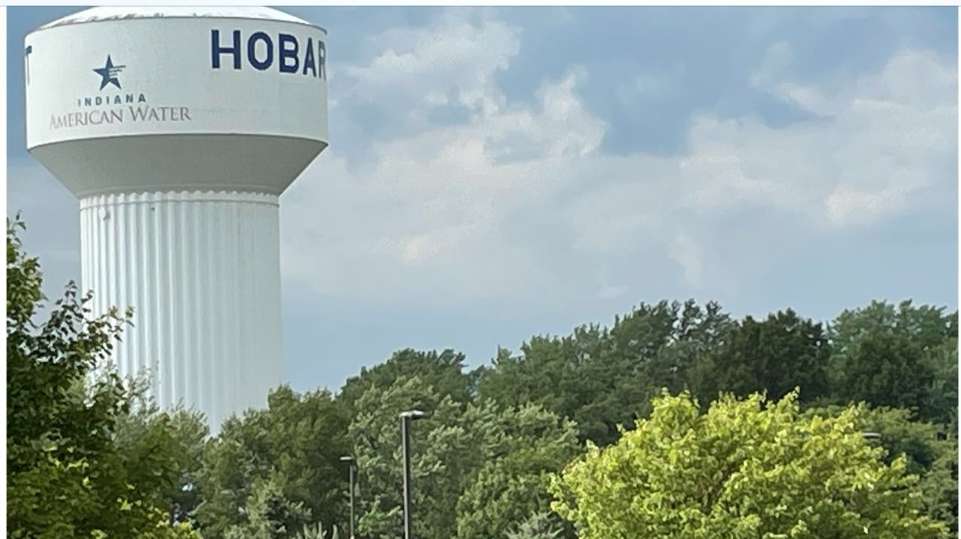 Hobart City Council Passes Tax Abatement for Data Center 6-0
With just a 72 hour Change of Venue notice to the move the City Council Meeting to the High School, over 250 Residents attended the Hobart City Council Meeting on January 7th, 2026 regarding Tax Abatement for the 15 Billion Dollar Amazon Data Center Development in Hobart Indiana. The Plan Commission has approved…
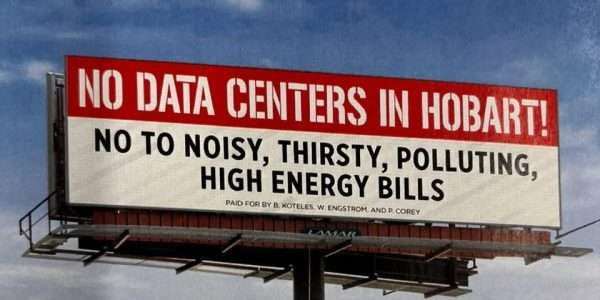
Breaking: Hobart Citizens Sue Their City Over Data Center Actions
HOBART INDIANA : Four homeowners have asked an Indiana judge to vacate multiple actions by the Hobart Indiana City Council and Plan Commission that have prepped the way for the possible construction of a giant, Amazon Data Center on more than a square mile of farmland within the city limits. …

Angry Crowd Attends Hobart City Council Meeting Regarding Data Centers
The November 5th, 2025 City of Hobart Lake County Indiana Common Council Meeting was called to order by Mayor Huddlestun at 6pm. The Correspondence was then announced after the Minutes were approved. Chief of Staff and Department reports were submitted by City Engineer, Alex Metz, Public Works Director Kent Moore, and Board…

Data Centers Have Been Known to Damage Wetlands
The Deep River wetlands around Hobart Indiana’s Deep River flows through Lake County Indiana towards Lake Michigan. Deep River wetlands refer not just to a single swamp or marsh, but to a network of wetlands, riparian corridors, floodplains, forested bottomlands, marshes, woodlands, savannas, lakes, rivers, ravines, bottomland forests and prairie habitats that are scattered…

Hobart In Lake County Indiana is Known for it’s Biodiversity and Wetland Ecosystems
Northwest Indiana—especially Lake County along the southern shore of watershed basin of Lake Michigan — contains one of the most ecologically diverse regions in the whole county. This diversity comes from the area’s unique glacial history, the mixing of dune, wetland, and prairie ecosystems, and the influence of Lake Michigan’s moderating climate. …

Research Indicates the Bird Population Could Die On Lake George (Hobart) with Data Center Operations
Lake George, in Hobart Indiana, is a vibrant stopover and a winter haven for a diverse array of water birds, from the year-round mute swans (your ~5 residents) to the seasonal influx of 36 plus trumpeter swans in winter. Sandhill cranes forage in the nearby fields and lake shallows and there’s an ever-present…

Regional Air, Water and Soil Pollution Discussed on Calumet Revisited on Zoom
The December 2ND, 2025 Calumet Revisited forum will offer perspectives on several ongoing health-focused research efforts in the Calumet region.
Dr. Susan Duncan, a researcher with the Department of Medicine at the University of Chicago, says these studies seek to better understand regional air, water and soil pollution in ways that enable both community members and researchers to benefit from collaborative, “community science” endeavors.
CONTINUE READING . . .

Gas Station Debate Dominates Valpo Council Meeting
The Valparaiso Council Chambers were decked with Christmas regalia for the November 24th 2025 City Council meeting. The meeting ran for just under three hours with four items of business on the agenda. There were two ordinances dealing with zoning changes, one concerning the city budget and under other business there was discussion…
Continue Reading →

Shirley Heinze Acquires 4,000 Acres in Stake County
4,000 Acres of the “Big Eastern property” in rural Stake County has been acquired by Shirley Heinze Land Trust, to protect and preserve the land. “For over sixty years, the Lucas family has treasured and provided stewardship for this fascinating and biodiverse sand country landscape,” said Marty Lucas, President of Big…

Susie Young Baxter, CEO, has published PanoramaNOW Magazine for 31 years. Her hobbies are Camping, Boating, Hiking, Nature, Gardening and Outdoor Activities. She is an Artist, Graphic Designer, an Avid Seamstress, Dabbles in Homemade Crafts and Landscaping. Since her Father was a Health Teacher, she also likes homeopathic Health Solutions. Since blogging started over 10 years ago, PanoramaNow has been added to Newsbreak – a national news affiliate.


