
by Davie Allen Roy
Photo by Drone Brothers
SO WHO WERE THE FINANCIAL GENIUSES BEHIND THE AMAZON DATA CENTER DEAL NEAR NEW CARLISLE?
Since we have been talking about how data centers actually make their money, I figured we should probably take a closer look at what happened right here in New Carlisle, Indiana.
The first thing worth clearing up is that New Carlisle itself did not negotiate this deal. St. Joseph County did.
Back in 2024, Amazon Web Services announced plans for an enormous data-center campus near New Carlisle. The original investment was approximately $11 billion, making it one of the largest private capital investments ever announced in Indiana, and the largest data center in the country. County leaders understandably saw construction jobs, investment and a chance to land one of the biggest technology projects in the country.
Then came the tax incentives.
The agreement included a 50% real-property tax abatement for 10 years and an 85% exemption on qualifying high-tech equipment for 35 years. Later reporting described the initial value of Amazon’s property-tax abatement at about $4 BILLION OVER 35 YEARS.
St. Joseph County Economic Development Director Bill Schalliol was confident about the numbers when officials were selling the agreement to the public. His assessment at the time was pretty straightforward: “I think the math is very good for the county.” Commissioner Carl Baxmeyer was similarly enthusiastic, arguing that Amazon would still become an enormous taxpayer and describing the project as extremely difficult to turn down.
There was one problem.
Somebody with an economics background was already standing there telling them that his math looked very different. Retired economics professor and St. Joseph County resident Steve Francis estimated that Amazon would receive roughly $4.2 billion in tax breaks while the county would collect about $2.2 billion over the same period. His analysis put the foregone tax revenue at roughly $5 million for each of the 400 permanent jobs originally committed in the county agreement. County officials rejected that analysis and moved forward anyway.
The Board of Commissioners and Redevelopment Commission approved their portions unanimously, while the County Council approved the package 7–2. Amy Drake and then-Council President Mark Root were the only two council members who voted no. Amazon got the agreement, construction kept moving, and everybody went home.
Less than two years later, something pretty interesting happened.
Four St. Joseph County Council members sent Amazon a letter asking whether the company would reconsider some of those tax breaks. Amy Drake was one of them, which makes sense because she opposed the original package. Andy Rutten was not serving on the council when the deal was approved. The other two names were Joe Thomas and Randy Figg, and both had been sitting on the council when the original package passed 7–2 with only Drake and Root opposed. In other words, two people who helped approve the deal were now asking Amazon whether it might reopen the deal.
By June 2026, the situation became even harder to ignore. During the county’s annual review of tax abatements, officials learned that Amazon Web Services had nearly $38 MILLION IN PROPERTY TAXES ABATED DURING JUST THE FIRST HALF OF 2026. Drake, Thomas, Figg and Rutten then asked whether Amazon would voluntarily contribute some of that abated money toward a fund that could help reduce homeowners’ property-tax bills.
Amazon had not violated the agreement.
That part matters.
The company negotiated a deal, St. Joseph County approved it, and Amazon was using exactly what government officials agreed to give it. When council members asked Amazon to renegotiate in March, the company pointed instead to more than 900 people it said it had hired, more than $7 million toward road improvements and more than $250,000 in grants to local community organizations.
Meanwhile, the development itself was nowhere near finished.
Back when the agreement was approved, county officials were already talking about as many as 22 buildings being constructed over the following 10 to 15 years. By July 2026, Amazon said 18 buildings were vertical and claimed its investment in St. Joseph County had already reached $13.8 billion, exceeding the original $11 billion commitment.
Then came the generators.
Amazon confirmed that it had submitted permit applications for 911 GENERATORS ACROSS THE TWO CAMPUSES and specifically said those additional emergency generators were being added to support more buildings on the New Carlisle campus. Amazon says the units are intended for emergencies, testing and maintenance rather than routine generation, but the important part for this story is why more of them are being permitted in the first place: the campus is still growing.
That means St. Joseph County officials are already asking Amazon whether it would kindly reconsider portions of a multibillion-dollar tax agreement while the project receiving those abatements is still expanding. The company keeps adding buildings, servers and computing capacity. Every new piece of that infrastructure can increase the amount of digital work that campus can perform and the amount of revenue that can ultimately be generated from the site.
New Carlisle, however, is sitting beside the physical reality of everything that comes with it.
Town officials have already pushed back against another proposed data center on more than 1,000 acres of farmland nearby because they said the Amazon campus and the GM-Samsung battery plant were already putting pressure on water, traffic and emergency-response resources. Town Council President Marcy Kauffman said another data center “will just crush us” and that New Carlisle could not sustain another one. That separate proposal was ultimately rejected by the St. Joseph County Council after overwhelming local opposition.
Even the local fire service has felt the change. New Carlisle-area fire officials reported a 24% increase in call volume during construction, including calls to the Amazon sites and more accidents along State Road 2.
So now think about where this leaves a town like New Carlisle.
Amazon can continue building out a campus under agreements made largely at the county level. The company keeps investing, construction continues, more buildings are added and hundreds of backup generators are being permitted to support that growth. New Carlisle can fight separate developments around it and can advocate for its own infrastructure, but the town cannot simply wake up one morning and undo the tax agreement St. Joseph County already gave Amazon.
The economics warning did not come five years later with perfect hindsight. Steve Francis was standing there BEFORE THE DEAL WAS APPROVED telling county officials that he believed the numbers did not add up.
They went forward anyway.
Less than two years later, some of the very officials who approved the package were asking Amazon to reopen it while Amazon was still adding onto the project.
Now drive about an hour west.
Lake County has already approved the agricultural-to-industrial rezoning needed to move a roughly 160-acre data-center proposal near Lowell into its next stages of public review, despite significant opposition from residents. The rezoning itself does not grant final approval, and the project still requires additional special-exception review.
So after watching St. Joseph County receive an economic warning, approve a massive incentive package anyway, watch the project keep expanding and then begin asking Amazon for some of the money back less than two years later, there is one question I think Lake County ought to be asking before anybody signs the next deal.
Are we starting to watch the exact same story play out all over again in Lake County?
David Allen Roy is a real estate agent and founder of One Beautiful Home, you can follow him on Facebook.
#DataCenters #NewCarlisle #LakeCountyIndiana #FollowTheMoney #Indiana
MORE RELATED ARTICLES . . .
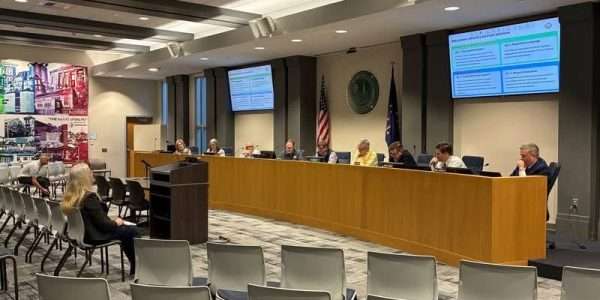
Valparaiso Begins Work on Data Center UDO (Unified Development Ordinances)
The city of Valparaiso is working on development and zoning regulations specifically addressing data centers. Data centers were the topic of discussion this evening at the October 6th, 2026 at the Plan Commission meeting. Currently Valparaiso has a moratorium on data centers, but it “Shall automatically expire upon the effective date of amendments…

EMF Concerns at Data Centers (And Mechanical Waves)
Data Centers pose greater net risks by creating “EMF Vibrations” that degrade the quiet and natural habitat wildlife relies on for food, reproduction, communication, navigation and survival. Furthermore, what most people are ignoring is the fact that there are High and Low Mechanical Waves and there are High and Low EMF Waves, each effecting each other, creating a circular relationship that spirals into an increasingly harmful outcome, creating outcomes well after installation that are extremely difficult to diagnose and rectify.
CONTINUE READING . . .

Alarming Health Implications from Virginia’s Data Center boom (a peer Reviewed study)
Many Hobart Data Center proponents site the successes of Virginia’s Data Centers as an example of their “safe” uses. That was then, this is now. Many Alarming impacts have come out after Virginia’s Data Center boom started, published by George Mason University, Fairfax, Virginia. A new groundbreaking study uncovers the alarming Health…

Here’s More about finding the rules and regulations for Indiana Environmental Impact Studies
We found some very interesting Environmental links from the National Environmental Policy Act (NEPA) and hazardous material requirements. This Office is responsible for red flag investigations, Phase I & II environmental site assessments (ESA), remediation of contamination discovered during construction, noise barrier assessments, air quality reviews, and the preparation/ review of NEPA documents.…
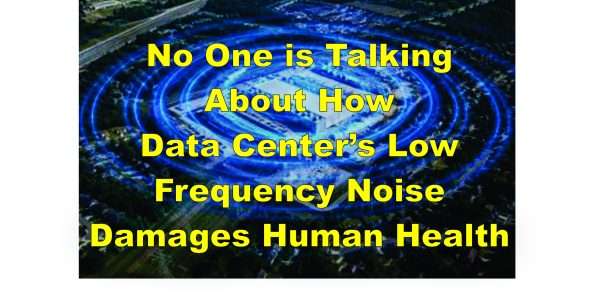
Data Center’s Low Frequency Noise Is a Hidden Danger Nobody Is Talking About
Do you know what Low Frequency Noise is? Well, if you don’t, you’re in good company, because neither does your City Council, or the Leaders approving the Data Centers being built next to where people live. Expansive parking lots and flat fields offer no protection against LFN dangers. The brain can process a train…
 (2025) UNIVERSITY OF MICHIGAN: Gerald Ford School of Public Policy:
What Happens When Data Centers Come To Town (A Peer – Reviewd Study) :
Current technologies force a tradeoff between energy and water efficiency, limiting sustainable solutions. Data Centers Do Not Bring in High Paying Jobs; Data Center Tax Breaks Only Benefit Corporations; Reduces Tax Revenue for School Districts; Higher Energy Rates for Consumers; Higher Resource Consumption; And Much More.
CONTINUE READING

Susie Young Baxter, CEO, has published PanoramaNOW Magazine for 31 years. Her hobbies are Camping, Boating, Hiking, Nature, Gardening and Outdoor Activities. She is an Artist, Graphic Designer, an Avid Seamstress, Dabbles in Homemade Crafts and Landscaping. Since her Father was a Health Teacher, she also likes homeopathic Health Solutions. Since blogging started over 10 years ago, PanoramaNow has been added to Newsbreak – a national news affiliate.


