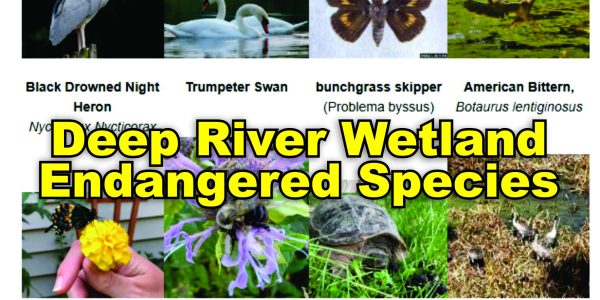
Since the Indiana Natural Heritage Data Center Database does not guarantee the existence of Endangered Species in the Deep River Wetland area of Hobart Indiana, we have collected photographs from Hobart residences that live there. We would like to thank these residents for their devotion to this project, but are also looking for more photographs from local residence to add to this list. Many of these photos are taken within less than a quarter mile from the proposed Hobart Data Center Location.
We have been working on this project since October of 2025, and are still looking for a Golden Eagle photo. Eagles are very prevalent in the Lake George area, but are not protected like the Golden Eagle is.
It is important to note that all of these photos were taken in 2025 and are documented for exact location and sometimes date. We would like to thank professional photographer and Hobart Resident Brenda Toby, and Naturalist and Hobart Resident Vernon Shaw who used the Flicker Software to document exact time, date and location of each photograph. Other Hobart residents have also provided us with photographs.
 Photographed above is the Black Crowned Night Heron, An Endangered Species
The Indiana Natural Heritage Data Center database provides information on the presence of endangered, threatened, or rare species, high quality natural communities, and natural areas in Indiana. The database was developed to assist in documenting the presence of special species and significant natural areas and to serve as a tool for setting management priorities in areas where special species or habitats exist.
The Natural Heritage Data Center database relies on observations from individuals rather than systematic field surveys by the Indiana Department of Natural Resources (IDNR). Because of this, it does not document every occurrence of special species or habitat. At the same time, the listing of a species or natural area does not guarantee that the listed species is present or that the listed area is in pristine condition. To assist users, the database includes the date that the species or special habitat was last observed and reported in a specific location.
HERE ARE THE PHOTOS WE HAVE SO FAR . . .
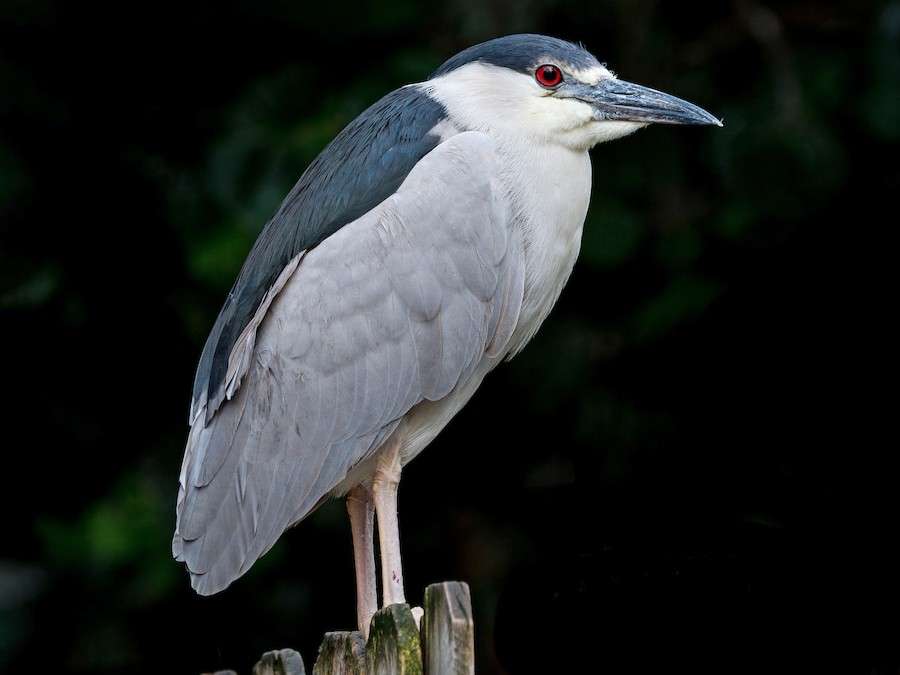 Black Crowned Night Heron Nycticorax Nycticorax |
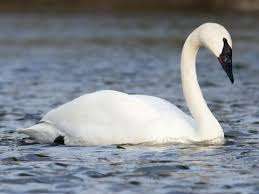 Trumpeter Swan (Cygnus buccinator) |
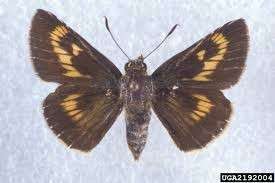 bunchgrass skipper (Problema byssus) |
 American Bittern, Botaurus lentiginosus |
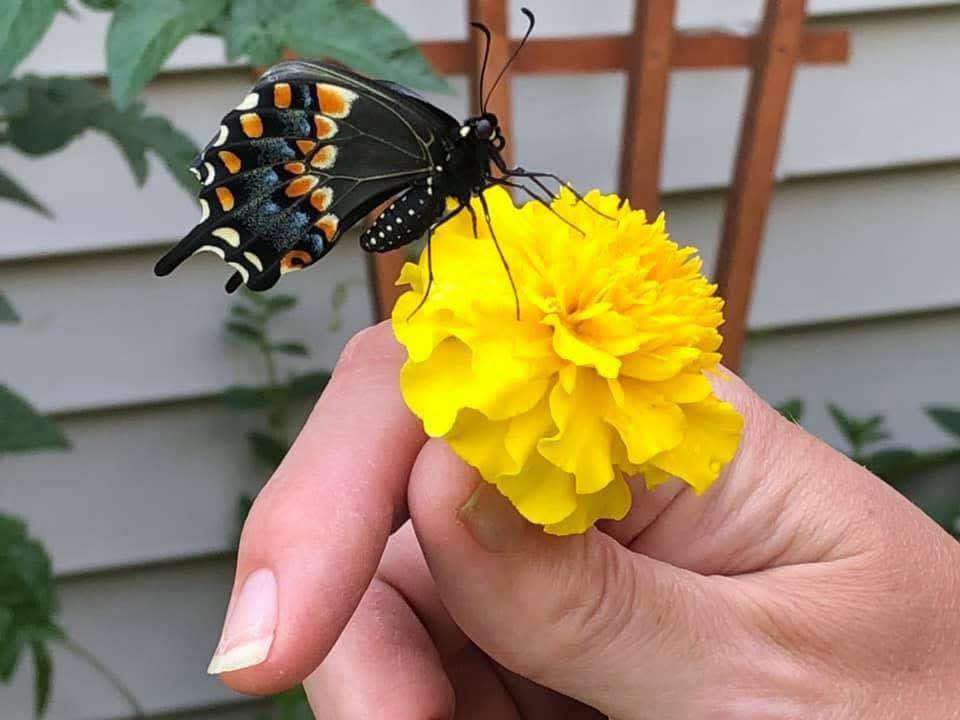 Shallow Tail Butterfly (papilio polyxenes) |
 Eastern Bee- Balem Monarda bradburiana |
 Blanding Turtle – emydoidea blandingii |
 Whooping Crane FE Grus americana. |
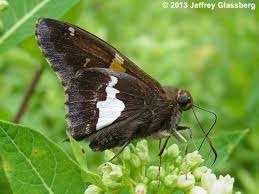 Silver Spotted Skipper Epargyreus clarus. |
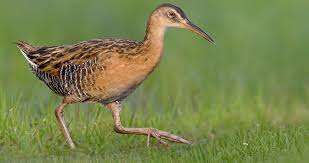 King Rail (Rallus elegans) |
 Marsh Wren (Cistothorus palustris) |
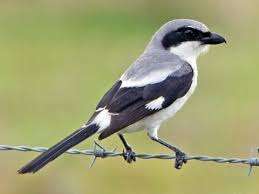 Loggerhead Shrike Lanius ludovicianus |
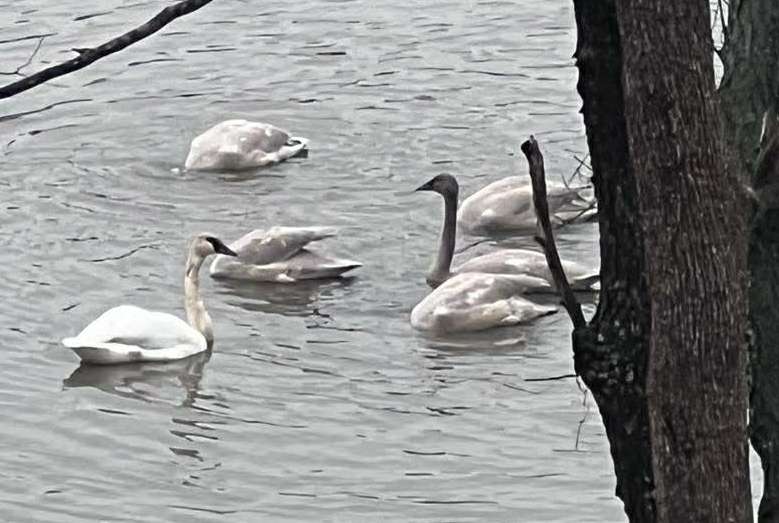 Flock of Trumpeter Swans Photo taken by
Joanne Oros on Lake George, Hobart Indiana
Less than a Half mile away from the Hobart Data Center Location
PanoramaNOW is on a quest to find these specific endangered species in the Deep River Wetland and Sprout Ditch Area. If you find one, please email it over to us and we will give you photo credits on our website! And Facebook! You will need to keep track of where you took the photo and what day is was. Our email address is panoramanow@comcast.net. Please put “Endangered Species” in the Subject line.
Many of these birds listed above are also documented on the ebird.org app. since 2021. The Ebird has Two Locations, both Lake George, and also Fred Rose park, which is less than a half mile from the Data Center Location.
ACCORDING TO THE EBIRD.ORG Website: 85 Species were Observed at Hobart’s Fred Rose Lakeshore Park (Alone)
In October 2025, 8 Species were Observed in Fred Rose park: 20, Canadian Geese, 2 Mute Swans, 110 Wood Ducks, 115 Mallards, 3 Double Crested Cormorant, 5 Great Egrets, 2 Red -Headed Woodpeckers, and 2 Red Bellied Woodpeckers.
In July 4th 2025: An Anonymous Birder Observed: 1 caspian tern, 2 Great Blue Heron, 1 Osprey, 3 northern Flicker, 2 Great Crested Flycatcher, and 1 Baltimore Oriole.
ACCORDING TO EBIRD.ORG. WEBSITE, 129 Bird Species have been found at Lake George, 46 Species have been found at Lake George in 2025.
Species Found in 2025 Include:
American Coot, American Herring Gull, American Crown, American Robin, Bald Eagle, Barn Swallow, Belted Kingfisher, Black-capped Chickadee, Black-crowned Night Heron, Blue Jay, Brown-headed Cowbird, Caspian Tern, Cackling Goose, Canada Goose (950) Common Merganser, Common Goldeneye, Chimney Swift, Common Grackle, Common Nighthawk, Double-crested Coromorant, Domestic Canada Goose, Domestic Goose sp., European Starling, Graylag Goose, Gray Carbird, Great Blue Heron, Great Egret, House Finch, Hooded Merganser, House Sparrow, Mallard (100), Kildeer, Mourning Dove, Mute Swan, Northern Rough-winged Swallow, Northern Cardinal, Osprey, Red-winged Blackbird, Red-breasted Merganser, Red-tailed Hawk, Ring-billed Gull, Red-bellied Woodpecker, Ruby-throated Hummingbird, Song Sparrow, Turkey Vulture, Tree Swallow, White-breasted Nuthatch, Wood Duck, and Yellow-rumped Warbler,
As an environmental advocacy organization, we highly prioritize endangered species and are committed to protecting their livelihoods to the greatest extent possible. Please feel free to contribute to this project.
More Related Articles . . .

West Little Calumet River Wetland Restoration Project in Gary, Hammond and Hobart Indiana
The Wetlands Initiative (TWI) was awarded a $794,000 grant from the National Fish and Wildlife Foundation’s (NFWF) National Coastal Resilience Fund (NCRF) to complete this “Community-centered Final Design” phase. This project is being collaboratively facilitated by the Little Calumet River Conservation Collaborative. The West Branch of the Little Calumet River corridor covers…

Amazon Required Wetland Mitigation to Offset the HyperScale Damage in Hobart Indiana
When a data center pays for wetland restoration in a different location, it is typically called wetland mitigation or a voluntary water replenishment / stewardship project. Wetland Mitigation (or Off-site Mitigation) is usually required by environmental regulators (like the EPA or state environmental departments) when a data center paves over local…
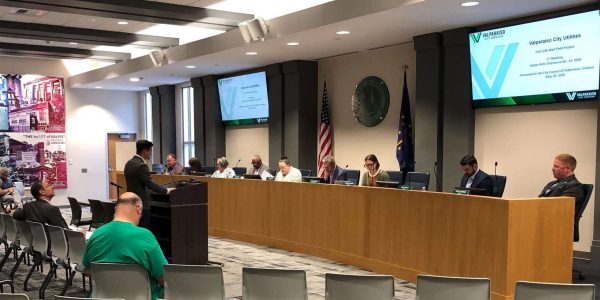
Valparaiso Council Considers 14 Million For Water Infrastructure
May’s second Valparaiso City Council meeting usually held on the fourth Monday of the month was held on Tuesday May 26th , 2026 this month because of the observance of Memorial Day. There was only one ordinance on the agenda for the evening and the meeting went for just about an hour. Citizen…

Alarming Health Implications from Virginia’s Data Center boom
Many Hobart Data Center proponents site the successes of Virginia’s Data Centers as an example of their “safe” uses. That was then, this is now. Many Alarming impacts have come out after Virginia’s Data Center boom started published by George Mason University, Fairfax, Virginia. A new groundbreaking study uncovers the alarming Health…

Endangered Species Found In Cedar Lake Indiana
On July 2nd, 2020 Humane Indiana Wildlife received a call about two young chicks found in a window well in Cedar Lake, IN. Upon further communication with the two teens who found the chicks, it was determined the chicks were actually Virginia Rails, an endangered species in the state of Indiana. “When the finders…

Studies Say the Bird Population will Die On Lake George (Hobart) with Data Center Operations
Lake George, in Hobart Indiana, is a vibrant stopover and a winter haven for a diverse array of water birds, from the year-round mute swans (your ~5 residents) to the seasonal influx of 36 plus trumpeter swans in winter. Sandhill cranes forage in the nearby fields and lake shallows and there’s an ever-present…

How Hobart Indiana’s Amazon Data Centers Will Get Their 3GW Power And 400 MW of Storage
The following information regarding the source of power for the Hobart Data Centers has been found online, however, since we are a local Northwest Indiana company, we thought it was pertinent to publish this information intended solely for local educational purposes. A Northern Indiana Public Service Co. affiliate, known as NIPSCO Generation (GenCo),…

Sandhill Cranes Returning To Northwest Indiana
Habitat Restoration at Indiana Dunes National Park Sees Success as Sandhill Cranes Return Right now, thousands of sandhill cranes are gathered in the Great Marsh at Indiana Dunes National Park—and it’s an incredible reminder of what habitat restoration can achieve. For thousands of years, the Great Marsh was a place where…

New Report Published about the Effects of Data Centers On the Great Lakes
The Hobart Indiana Data Center is located closer to Lake Michigan than most folks realize. It’s actually 12 miles as the crow flies, and 16 miles using a 100% waterway, from Deep River (Hobart) to Lake Michigan. The effect of Data Centers on the Great Lakes is an important issue that should be…

Save The Dunes Transfers 5 Properties Over to Shirley Heinze
In Late December, 2025 Save the Dunes transferred ownership of five properties to Shirley Heinze Land Trust! With this transfer, Save the Dunes can focus its resources on supporting Indiana Dunes National Park and advancing its advocacy and community outreach work, while we utilize our expertise and experience to continue the stewardship and…

Hobart In Lake County Indiana is Known for it’s Biodiversity and Wetland Ecosystems
Northwest Indiana—especially Lake County along the southern shore of watershed basin of Lake Michigan — contains one of the most ecologically diverse regions in the whole county. This diversity comes from the area’s unique glacial history, the mixing of dune, wetland, and prairie ecosystems, and the influence of Lake Michigan’s moderating climate. …

Proven Documentation that Data Centers Damage Wetlands
The Deep River wetlands around Hobart Indiana’s Deep River flows through Lake County Indiana towards Lake Michigan. Deep River wetlands refer not just to a single swamp or marsh, but to a network of wetlands, riparian corridors, floodplains, forested bottomlands, marshes, woodlands, savannas, lakes, rivers, ravines, bottomland forests and prairie habitats that are scattered…

Birding in the Miller Beach Area
Late Fall and Early Winter are the Best times to find migrating Birds in Indiana’s diverse habitats that are home to over 400 documented bird species, making it the perfect place for a birding adventure. The birding experiences won’t disappoint, from the one-of-a-kind migration of Sandhill Cranes to Bald Eagles perched atop tree-tops.…

Susie Young Baxter, CEO, has published PanoramaNOW Magazine for 31 years. Her hobbies are Camping, Boating, Hiking, Nature, Gardening and Outdoor Activities. She is an Artist, Graphic Designer, an Avid Seamstress, Dabbles in Homemade Crafts and Landscaping. Since her Father was a Health Teacher, she also likes homeopathic Health Solutions. Since blogging started over 10 years ago, PanoramaNow has been added to Newsbreak – a national news affiliate.


