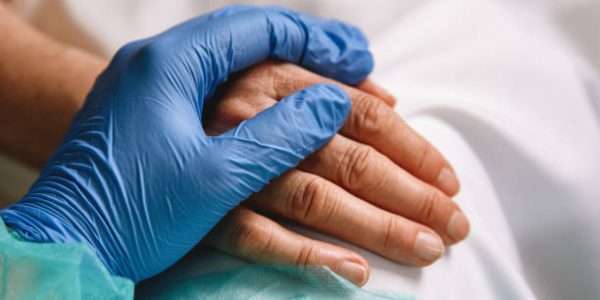
Integrating Spiritual, Intuitive, and Holistic Dimensions
by Julian Ungar-Sargon MD PhD
Borra College of Health Sciences
Dominican University
April 2025
INTRODUCTION
Contemporary healthcare exists at a crossroads. Despite remarkable technological advancements, there remains a profound disconnect between practitioners and patients, between clinical protocols and lived experiences of illness. This chapter proposes a new paradigm for the therapeutic relationship that transcends the limitations of the current biomedical model. Drawing upon a body of work that spans neurobiology, spirituality, philosophy, and clinical practice, I present an integrated framework that reimagines the physician patient relationship as a sacred encounter characterized by presence, intuition, and mutual transformation.
The modern healthcare system, shaped largely by Cartesian dualism and capitalist imperatives, has produced a fragmented approach to healing that often neglects the whole person. As explored in recent works, these foundational assumptions have led to a mechanistic understanding of illness that separates mind from body, patient from context, and healing from spirituality.
This chapter synthesizes insights from my research and scholarly work to articulate a vision of healthcare that honors the multidimensional nature of healing—one that encompasses the neurobiological, psychological, social, and spiritual domains of human experience. By reclaiming the therapeutic relationship as a space of divine presence, intuitive wisdom, and authentic encounter, we can move toward a model of medicine that truly serves the flourishing of both patients and practitioners.
Situating This Work Within the Field: A Comparative Analysis
My approach to reimagining the physician-patient relationship builds upon, yet distinctly differs from, other significant contributions to this field. While sharing concerns with prominent thinkers about the limitations of contemporary healthcare, my work offers a unique integration of neurobiological, spiritual, and philosophical dimensions that distinguishes it within the scholarly landscape.
 Comparison with Biomedical Ethics Approaches
Traditional biomedical ethics, as represented in the work of Beauchamp and Childress, has focused on four principles: autonomy, beneficence, non maleficence, and justice. While these principles provide a valuable framework for ethical decision-making, they often operate within a rationalistic paradigm that neglects the relational and spiritual dimensions of healing. Similarly, the work of Schneiderman and Jecker on medical futility, while offering important insights into resource allocation and end-of-life care, remains largely within a utilitarian framework that doesn’t fully address spiritual dimensions of suffering and mortality.
My work extends beyond these principles and utilitarian approaches by emphasizing the sacred character of the therapeutic encounter and the transformative potential of authentic presence. Unlike the contractual models of the physician-patient relationship that predominate in bioethics literature, my covenantal model grounds the therapeutic relationship in reciprocal fidelity rather than transactional obligations. This perspective aligns somewhat with Edmund Pellegrino’s virtue ethics in medicine but goes further in exploring the specifically spiritual dimensions of clinical practice.
Beyond Narrative Medicine
The narrative medicine movement, pioneered by Rita Charon and others, has made invaluable contributions by reclaiming the importance of patient stories in clinical practice. My work shares narrative medicine’s commitment to attentive listening and recognition of the patient’s lived experience. However, while narrative approaches often remain within a secular humanistic framework, my research integrates theological perspectives that understand the therapeutic relationship as a locus of divine presence.
Furthermore, my work on intuition and imagination in clinical decision making moves beyond narrative competence to explore pre-reflective, embodied forms of knowing that may not be fully capturable in narrative form. This emphasis on intuitive dimensions of clinical judgment complements narrative approaches while acknowledging modes of understanding that exceed discursive articulation.
Integration with Neuroscience and Trauma Research
Unlike many spiritually-oriented approaches to healthcare that lack scientific grounding, my research establishes neurobiological foundations for understanding the interconnection between physical, psychological, and spiritual dimensions of healing. This integration of cutting-edge neuroscience with spiritual perspectives differentiates my work from both purely biomedical approaches and new age healing paradigms that lack scientific rigor.
My research on trauma and PTSD aligns with the work of Bessel van der Kolk and others in the trauma field but extends it by incorporating theological reflections on suffering, meaning-making, and transcendence. Where Shapiro has explored the interface between spirituality and recovery in the context of addiction, my work broadens this approach to encompass a wider range of trauma-related conditions and healthcare contexts. This integration offers clinicians a framework for addressing not only the neurobiological impacts of trauma but also its existential and spiritual dimensions.
Distinctive Theological Framework
While other scholars have explored connections between spirituality and healthcare, such as Christina Puchalski, Harold Koenig, and more recently Singh and Ajinkya, my work develops a distinctive theological framework drawing upon kabbalistic concepts of tzimtzum and the dialectic of divine presence and absence. This framework offers a unique perspective on the paradoxical nature of healing relationships, where both revelation and concealment, presence and absence, play essential roles.
My theological approach is particularly influenced by two traditions: the Hasidic teachings of Rabbi Nachman of Breslov, with his emphasis on finding God in both joy and suffering, and Simone Weil’s explorations of attention, gravity, and grace. Like Daelemans’ work on sacred emptiness in architectural space, my research explores how therapeutic spaces can embody a dialectic of presence and absence that facilitates healing encounters.
Unlike approaches that either bracket religious perspectives as private matters or impose specific doctrinal frameworks, my theological reflections operate at the level of fundamental human experiences of vulnerability, connection, and transcendence that cross religious boundaries. This approach makes my work accessible and relevant to practitioners from diverse spiritual backgrounds while still honoring the depth of particular religious traditions.

Critical Perspective on Technology and AI
My work on artificial intelligence in healthcare offers a critical perspective that differs from both technophilic enthusiasm as seen in the work of Eric Topol and more cautious approaches like those of Meredith Broussard. By examining the spiritual and ethical implications of AI in medicine, I provide a nuanced assessment of how technological tools can complement rather than replace the essentially human dimensions of healthcare relationships.
This approach contrasts with technological determinism and instead advocates for technological humility—a stance that recognizes both the potential benefits of AI and its fundamental limitations in addressing questions of meaning, purpose, and transcendence that lie at the heart of healing relationships. Holistic Integration of Disparate Elements.
Perhaps the most distinctive aspect of my contribution to the field is the integration of elements that are typically treated in isolation: neurobiological research, clinical practice improvements, ethics, spirituality, and philosophical reflection. While many scholars excel in one of these domains, my body of work[1-29] creates bridges between them, offering a truly transdisciplinary
vision for healthcare transformation.
This integrative approach addresses what I have identified as the “Cartesian split”[1] that continues to fragment healthcare, dividing mind from body, science from spirituality, and technique from presence. By challenging these dichotomies, my work offers a unique contribution to reimagining the physician-patient relationship as a multidimensional encounter that honors the full complexity of human healing.
The Crisis in Contemporary Healthcare
The Fragmentation of Care
The modern healthcare system operates within a paradigm that systematically fragments care. In “Revisioning Healthcare in a Different Key” (Ungar-Sargon, 2024), I explored how the specialization of medicine, while advancing technical expertise, has inadvertently contributed to a reductionistic approach that treats diseases rather than persons. This fragmentation manifests in multiple dimensions:
Conceptual fragmentation: The Cartesian division between mind and body continues to influence how we understand illness and treatment, creating
artificial boundaries between physical symptoms and psychological experiences.
Structural fragmentation: Healthcare delivery systems separate patients into specialized departments based on organ systems or disease categories, resulting in disjointed care that fails to address the interconnected nature of health challenges.
Temporal fragmentation: The acceleration of medical consultations leaves little room for the unfolding of patient narratives, limiting the physician’s
ability to grasp the full context of illness.
Spiritual fragmentation: The secularization of medicine has marginalized questions of meaning, purpose, and transcendence that are central to many patients’ experiences of illness and healing.
The Crisis of Soul in Medicine
In several recent publications, I examined how this fragmentation has precipitated a profound crisis of meaning for both patients and practitioners. Physicians increasingly report burnout, moral distress, and a sense of alienation from the values that initially drew them to medicine. Similarly, patients often describe feeling reduced to their diagnoses, deprived of agency, and disconnected from the healing resources of their own spiritual and psychological lives.
This crisis of soul reflects not merely personal struggles but a systemic failure to honor the sacred dimensions of healing. As articulated in forthcoming work, the physician’s role has always entailed moral complexity, demanding a level of spiritual and ethical engagement that contemporary medical education rarely addresses. Foundations for a New Paradigm
Foundations for a New Paradigm
The Neurobiological Basis for Integrated Care
My research into the neurobiology of trauma and addiction provides a scientific foundation for understanding the interconnectedness of physiological, psychological, and spiritual dimensions of healing. In recent studies[6,7], I demonstrated how traumatic experiences reshape neural pathways, affecting not only psychological function but also physiological regulation and spiritual well-being.
This neurobiological perspective challenges the Cartesian separation between mind and body, revealing how our embodied experiences shape our understanding of ourselves and our relationship to the world. The brain’s plasticity—its capacity to reorganize in response to experience—provides a biological basis for the transformative potential of the therapeutic relationship.

The Role of Intuition and Imagination
Central to the new paradigm is a reclamation of intuition and imagination as legitimate modes of knowing in clinical practice. In my 2024 work on clinical
decision-making, I argued that evidence-based medicine, while valuable, represents only one epistemic approach among many. The physician’s intuitive capacity to recognize patterns, sense underlying dynamics, and imagine alternative possibilities constitutes an essential complement to analytical reasoning.
This intuitive dimension of clinical judgment draws upon tacit knowledge accumulated through experience—a form of embodied wisdom that cannot be reduced to algorithmic protocols or standardized guidelines. By honoring intuition, we recognize the physician not merely as a technician applying knowledge but as a healer whose presence and perceptiveness create conditions for transformation. This perspective resonates with recent work on doctor-patient relationships by Goold and Lipkin, but extends their focus on communication skills to incorporate deeper dimensions of intuitive presence.
The Spiritual Dimension of Healing
Perhaps most foundational to the new paradigm is a recovery of the spiritual dimension of the healing encounter. In forthcoming publications, I
explored how the physician-patient relationship can be understood as a sacred space characterized by both divine presence and absence.
Drawing upon kabbalistic concepts of tzimtzum (divine contraction/ concealment) and the dialectical tensions between presence and absence explored in recent theological reflections, I suggested that healing occurs within a relational space where both physician and patient participate in a process of mutual revelation and concealment. This spiritual framing reconceptualizes the therapeutic relationship not merely as a professional transaction but as an encounter with transformative potential.
Elements of the New Therapeutic Relationship
At the heart of the new therapeutic relationship is the practice of attentive listening. In a 2024 publication on effective listening[29], I demonstrated how
deep listening constitutes not merely a communication technique but an ethical stance toward the patient. When physicians truly listen—suspending judgment, attending to subtleties of expression, and creating space for the patient’s narrative to unfold—they honor the patient’s agency and dignity.
This form of listening requires a quality of presence that transcends the mechanical gathering of information for diagnostic purposes. It involves a
receptivity to the patient’s experience in all its complexity—physical, emotional, social, and spiritual. Through such listening, physicians gain access not only to symptomatic data but to the meaning structures through which patients interpret their illness.
Conclusion:
The vision articulated in this chapter moves beyond contractual models of the physician-patient relationship toward a covenantal understanding. While contracts specify bounded obligations between autonomous parties, covenants establish ongoing relationships characterized by fidelity, presence, and mutual transformation. The covenantal model recognizes healing as a sacred vocation that transcends technical expertise, encompassing dimensions of spiritual presence, ethical commitment, and personal formation.
This new vision does not reject the vital contributions of biomedical science but rather situates them within a larger framework that honors the multidimensional nature of healing. By integrating neurobiological insights, psychological understanding, social awareness, and spiritual wisdom, we can create a model of healthcare that addresses both the universal aspects of human suffering and the unique particularity of each person’s experience.
The transformation of the therapeutic relationship along these lines holds promise not only for enhancing clinical outcomes but for restoring meaning and purpose to the practice of medicine. By reclaiming the sacred dimensions of healing, we invite both patients and practitioners into a space of authentic encounter where transformation becomes possible—a space characterized by presence, compassion, and recognition of our shared vulnerability and dignity.
References available upon request.
MORE HEALTH RELATED ARTICLES . . .
Dr Ungar Talks about Spotting Multiple Sclerosis Symptoms and Seeking Help!
by Dr. Ungar
Understanding Multiple Sclerosis: Spotting Symptoms and Seeking Help!
Let’s shed light on Multiple Sclerosis (MS), a condition that requires our attention and understanding. If you or someone you know is experiencing these symptoms, seeking professional help is crucial: Common MS Symptoms: Fatigue Numbness or tingling Muscle weakness Difficulty…

Divine Presence in Healing: A Kabbalistic Approach to Compassionate Care by Dr. Ungar
Julian Ungar-Sargon MD PhD Borra College of health Science Dominican university As healers, we stand at the intersection of science and spirit, technique and presence. The way we conceptualize the divine—whether as a personal being or an impersonal force—profoundly shapes our approach to patient care. Drawing from Kabbalistic wisdom, I have found that integrating…

How Hyperbaric Oxygen Therapy Can Help You
Discover how hyperbaric oxygen therapy can accelerate wound healing, enhance brain function, reduce inflammation, and potentially support PTSD recovery.

Dr. Ungar Talks about Religion & Medicine During Passover
by Dr. Ungar Introduction As healers, we stand at the intersection of science and spirit, technique and presence. The way we conceptualize the divine—whether as a personal being or an impersonal force—profoundly shapes our approach to patient care. Drawing from Kabbalistic wisdom, I have found that integrating both Western and Eastern understandings of divinity…
The Pure Fat Loss Challenge Kick Off Northwest Indiana
You are Invited to the Pure Fat Loss Challenge Kick off Event, held on Saturday, December 27th, 2025 at the Dean and Barbara White Community Center 5:30 – 8:15, located in the Middle of Northwest Indiana! at 6600 Broadway, Merrillville, Indiana, just half mile West of I-65 and Hwy 30! Share with your friends to…

Susie Young Baxter, CEO, has published PanoramaNOW Magazine for 31 years. Her hobbies are Camping, Boating, Hiking, Nature, Gardening and Outdoor Activities. She is an Artist, Graphic Designer, an Avid Seamstress, Dabbles in Homemade Crafts and Landscaping. Since her Father was a Health Teacher, she also likes homeopathic Health Solutions. Since blogging started over 10 years ago, PanoramaNow has been added to Newsbreak – a national news affiliate.


