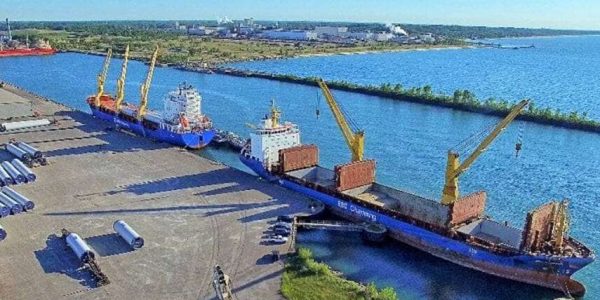
As the phrase goes, “Don’t mess with Mother Nature,” well Cleveland – Cliffs learned this lesson the hard way, after an environmental disaster occurred in 2019.
Active cleanup and environmental improvements at the Cleveland-Cliffs Burns Harbor steel mill in Indiana focus on correcting long-term water and air violations. Following a 2019 environmental disaster, the facility is under a consent decree to improve wastewater treatment, manage slag dust, and, as of 2026, manage air emissions, aiming to prevent cyanide and ammonia discharges into Lake Michigan.
Land Conservation:
As part of the settlement, 127 acres of Cleveland-Cliffs property worth $2 million was transferred to the Shirley Heinze Land Trust for ecological restoration, with the intention of eventually incorporating it into the adjacent Indiana Dunes National Park.
Key Aspects of Current Cleanup and Compliance:
- Water Quality Improvements: Cleveland-Cliffs is required to upgrade its wastewater treatment system, including a dedicated ammonia treatment system and a retention pond to prevent further discharges of toxic cyanide and ammonia-nitrogen into the Little Calumet River and Lake Michigan.
- Air Pollution Controls (2025-2026): Following a 2025 settlement for Clean Air Act violations, the EPA mandated that contractor Phoenix Global install new equipment to manage dust from slag, a byproduct containing toxic compounds like chromium, lead, and arsenic.
- Settlement and Penalties: The settlement, enforced by the EPA and environmental groups, required $3 million in civil penalties and the transfer of 127 acres of land near the Indiana Dunes National Park for conservation.
- Ongoing Monitoring: The facility is under strict monitoring to manage “once-through” water flow, ensuring that future operations do not result in fish kills or beach closures.
Air Pollution Mitigation
Consent Decree Enforcement: Under a federal consent decree, the facility continues to remediate the damage from a major August 2019 incident where a pump failure discharged excessive amounts of ammonia and cyanide into the East Branch of the Little Calumet River, causing severe fish kills and beach closures.
Upgraded Wastewater Systems: Cleveland-Cliffs is required to construct a new ammonia treatment system at its blast furnaces and follow strict sampling and emergency procedures to ensure wastewater is safely handled.
Emissions Controls: The EPA fined Cleveland-Cliffs $248,396 for Clean Air Act violations alone, stemming from its basic oxygen furnace shop. To resolve this, the company is implementing process controls to reduce particulate matter and hazardous air pollutants.
On-Site Contractor Cleanup: The EPA reached a $190,860 settlement with Phoenix Global, a contractor that processes slag at the Burns Harbor site.
The company is Required to-
- Blast Furnace Maintenance Delays: Cleveland-Cliffs postponed a critical maintenance investment on its blast furnace until 2027. Local environmental advocates continue to pressure the company to transition to clean steelmaking technologies rather than reinvesting in coal-dependent infrastructure.
Port Greening Initiatives
-
- Runoff Control Trees: The Port of Burns Harbor has planted 400 hundred native trees to naturally soak up stormwater runoff and capture hazardous dust. This helps form a protective buffer for the sensitive ecosystems within the adjacent Indiana Dunes.
Local Environmental Impacts
The surrounding community faces substantial ongoing ecological challenges: [1]- Air Quality Burden: Northwest Indiana continues to suffer from high rates of particle pollution. Burns Harbor remains one of the largest emitters of sulfur dioxide (\(SO_{2}\)), nitrogen oxides (\(NO_{x}\)), and fine particulate matter (\(PM_{2.5}\)) in the state.
- Greening the Port: To combat immediate runoff and dust issues, the Port of Indiana-Burns Harbor has planted over 400 trees—such as cedar and jack pine—to absorb stormwater and physically trap industrial dust.
Runoff Management:
Enhanced stormwater and groundwater monitoring are maintained to prevent toxins from leaching into Lake Michigan and the nearby Indiana Dunes National Park. required to install dust suppression equipment to curb the release of hazardous metals like manganese, chromium, lead, and arsenic.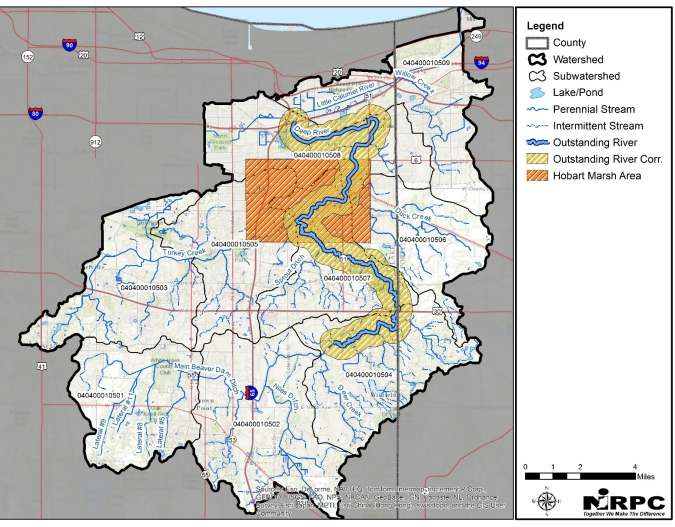
With all this cost and expense to Cleveland Cliffs, one has to wonder what will happen from the 15 Billion Dollar Amazon Data Center in Hobart indiana that is only 16 Miles from Burns Harbor. (SEE MAP ABOVE)
MORE RELATED ARTICLES . . .

EPA to Spend 200 Million Dollars to Clean Up Grand Calumet River
While long-term dredging in the Indiana Harbor Canal (Phase 2) began in 2021, new major cleanup projects for both the Indiana Harbor and the Grand Calumet River are set to begin in late 2026, following a 2026 EPA announcement of over $200 million for sediment remediation and restoration to remove pollutants.
CONTINUE READING
Amazon Makes Lots of Promises at Hobart Data Center Webinar
On march 31st, 2026 Amazon Web Services held a Webinar with the City Of Hobart Regarding their 15 Billion Dollar Data Center. After introductions by Heather Ennis and Mayor Josh Huddlestun, Josh Weisman, lead of the Amazon Web Services, discussed what Data Centers are for at 9:07 Minutes. (Mayor mentioned that…

Documented Endangered Species Close to Hobart Indiana’s Data Center Location
Since the Indiana Natural Heritage Data Center Database does not guarantee the existence of Endangered Species in the Deep River Wetland area of Hobart Indiana, we have collected photographs from Hobart Residences that live there. We would like to thank these residents for their devotion to this project, but are also looking for…

Studies Say the Bird Population will Die On Lake George (Hobart) with Data Center Operations
Lake George, in Hobart Indiana, is a vibrant stopover and a winter haven for a diverse array of water birds, from the year-round mute swans (your ~5 residents) to the seasonal influx of 36 plus trumpeter swans in winter. Sandhill cranes forage in the nearby fields and lake shallows and there’s an ever-present…

How Hobart Indiana’s Amazon Data Centers Will Get Their 3GW Power And 400 MW of Storage
The following information regarding the source of power for the Hobart Data Centers has been found online, however, since we are a local Northwest Indiana company, we thought it was pertinent to publish this information intended solely for local educational purposes. A Northern Indiana Public Service Co. affiliate, known as NIPSCO Generation (GenCo),…

Sandhill Cranes Returning To Northwest Indiana
Habitat Restoration at Indiana Dunes National Park Sees Success as Sandhill Cranes Return Right now, thousands of sandhill cranes are gathered in the Great Marsh at Indiana Dunes National Park—and it’s an incredible reminder of what habitat restoration can achieve. For thousands of years, the Great Marsh was a place where…

New Report Published about the Effects of Data Centers On the Great Lakes
The Hobart Indiana Data Center is located closer to Lake Michigan than most folks realize. It’s actually 12 miles as the crow flies, and 16 miles using a 100% waterway, from Deep River (Hobart) to Lake Michigan. The effect of Data Centers on the Great Lakes is an important issue that should be…

Save The Dunes Transfers 5 Properties Over to Shirley Heinze
In Late December, 2025 Save the Dunes transferred ownership of five properties to Shirley Heinze Land Trust! With this transfer, Save the Dunes can focus its resources on supporting Indiana Dunes National Park and advancing its advocacy and community outreach work, while we utilize our expertise and experience to continue the stewardship and…

Hobart In Lake County Indiana is Known for it’s Biodiversity and Wetland Ecosystems
Northwest Indiana—especially Lake County along the southern shore of watershed basin of Lake Michigan — contains one of the most ecologically diverse regions in the whole county. This diversity comes from the area’s unique glacial history, the mixing of dune, wetland, and prairie ecosystems, and the influence of Lake Michigan’s moderating climate. …

Proven Documentation that Data Centers Damage Wetlands
The Deep River wetlands around Hobart Indiana’s Deep River flows through Lake County Indiana towards Lake Michigan. Deep River wetlands refer not just to a single swamp or marsh, but to a network of wetlands, riparian corridors, floodplains, forested bottomlands, marshes, woodlands, savannas, lakes, rivers, ravines, bottomland forests and prairie habitats that are scattered…

Birding in the Miller Beach Area
Late Fall and Early Winter are the Best times to find migrating Birds in Indiana’s diverse habitats that are home to over 400 documented bird species, making it the perfect place for a birding adventure. The birding experiences won’t disappoint, from the one-of-a-kind migration of Sandhill Cranes to Bald Eagles perched atop tree-tops.…
-

Susie Young Baxter, CEO, has published PanoramaNOW Magazine for 31 years. Her hobbies are Camping, Boating, Hiking, Nature, Gardening and Outdoor Activities. She is an Artist, Graphic Designer, an Avid Seamstress, Dabbles in Homemade Crafts and Landscaping. Since her Father was a Health Teacher, she also likes homeopathic Health Solutions. Since blogging started over 10 years ago, PanoramaNow has been added to Newsbreak – a national news affiliate.


